The Moment I Realized I Was Leading from Chaos
The Moment I Realized I Was Leading from Chaos (And Why 88% of Leaders Never Recognize It)
By: Josiah Bridges
July 28, 2025
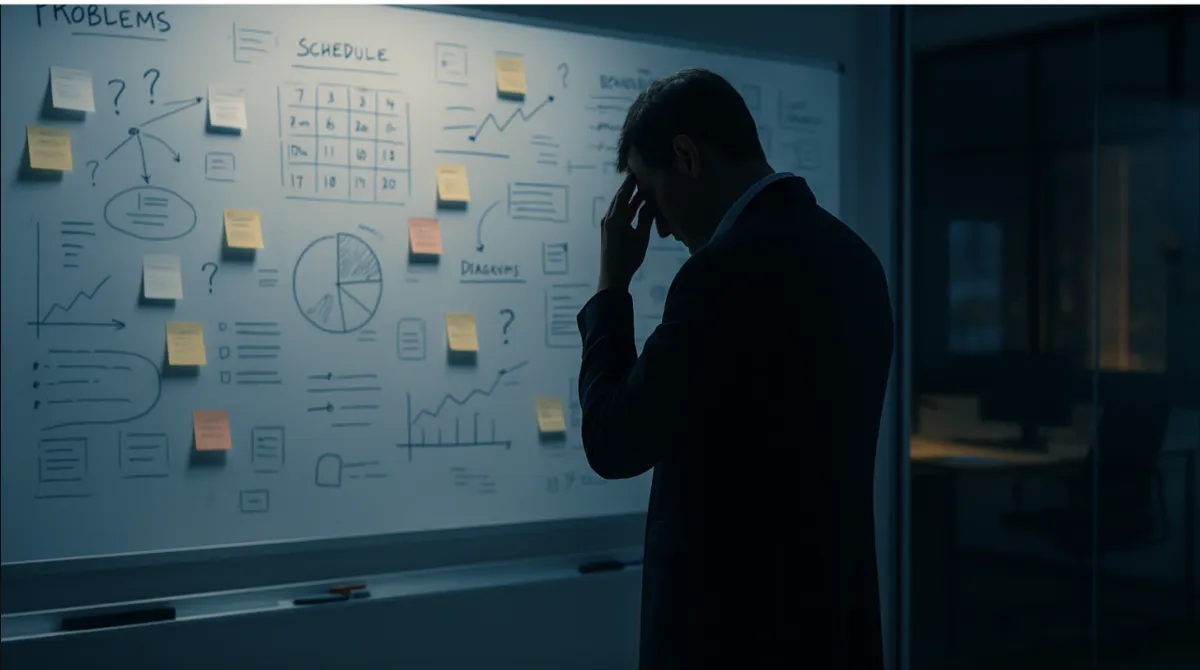
I was standing in our flight training facility at 2 AM, staring at a whiteboard covered in problems, when it hit me: I wasn't solving anything. I was just managing chaos.
We had planes grounded for maintenance, instructors calling in sick, frustrated students, and a schedule that looked like someone had thrown darts at a calendar. I'd been there for three hours, moving pieces around, trying to make it all work for tomorrow.
And I realized I'd been having this exact same conversation with this exact same whiteboard for months.
That's when I asked myself a question that changed everything: "How did I create this?"
Not "How did this happen to us?" Not "Why is everyone so unreliable?" But "How did I, as the leader, contribute to creating this chaos?"
The answer wasn't comfortable. But it was clarifying.
What I Was Learning About Leadership States
I discovered that every leader operates from one of two states at any given moment:
The Clarity State: Conscious, responsive, systems-aware. Taking responsibility for the energy and outcomes you create. Curious about root causes, not just symptoms.
The Chaos State: Reactive, defensive, symptom-focused. Blaming circumstances, people, or "the market." Certain about problems, blind to patterns.
That night at the whiteboard, I was deep in the Chaos State. I was treating symptoms (tomorrow's schedule) while ignoring the root cause (the systems I'd designed that created these recurring crises).
Why This Matters Beyond My Flight School
Here's what the research shows us: 88% of business transformations fail to achieve their original ambition. McKinsey's 15-year study reveals a 70% transformation failure rate. Bain's analysis of 400+ executives confirms these numbers.
But here's what caught my attention: The failures aren't due to bad strategy or insufficient resources. Meta-analyses of over 39,000 participants across 117 independent studies show that leadership psychology—not strategy or resources—is the primary determinant of organizational success.
We're not failing because we don't know what to do. We're failing because we're doing it from the wrong state of consciousness.
The Shift That Changed Everything
That night, I made a commitment: Before making any significant decision, I would ask myself one question: "Am I operating from clarity or chaos right now?"
If the answer was chaos—if I felt reactive, defensive, or focused only on symptoms—I would pause. Take a breath. Get curious about my role in creating the situation. Then respond from clarity.
Within six months, we achieved 64% revenue growth and built a 10x larger asset base. But more importantly, we stopped having those 2 AM crisis management sessions. We designed systems that prevented problems instead of just solving them after they occurred.
The Daily Practice That Makes the Difference
I've learned that consciousness isn't a destination—it's a practice. Here's the simple framework I use:
Morning Clarity Check-In: "Am I starting this day from clarity or chaos?"
Clarity: Open, curious, responsible, systems-aware
Chaos: Defensive, reactive, blaming, symptom-focused
Decision Point Protocol: Before any significant decision:
"What state am I in right now?"
"How did I/we contribute to creating this situation?"
"What's the root cause, not just the symptom?"
"What action serves the whole system?"
Evening Integration Review: "Where did I operate from clarity today? Where did I slip into chaos, and what triggered it?"
What I'm Still Learning
I'm not claiming to have this figured out. I still catch myself in the Chaos State—reacting instead of responding, blaming instead of taking responsibility. The difference is that now I recognize it faster and have tools to shift back to clarity.
What I am learning is that when leaders operate from clarity instead of chaos, they create the conditions for that 12% who succeed in transformation. They design systems that prevent problems. They develop people while delivering results. They create sustainable change instead of just managing the next crisis.
The Question That Started It All
So here's what I'm curious about: When you think about your biggest leadership challenges right now, are you operating from clarity or chaos?
Are you asking "How did this happen to us?" or "How did I contribute to creating this?"
Are you treating symptoms or addressing root causes?
Are you managing crises or designing systems that prevent them?
The research shows us that most leaders never ask these questions. They stay in the Chaos State, managing symptoms until the next transformation initiative fails.
But if you're willing to get curious about your own consciousness—to take responsibility for the energy and systems you create—you might discover what I did:
External transformation requires internal transformation. When you lead from clarity instead of chaos, you don't just change your results. You change your reality.
What's one pattern in your organization that might be a reflection of leading from chaos instead of clarity?
I'm building a platform around conscious leadership and operational transformation—sharing what I'm learning about moving from chaos to clarity in both life and business. If this resonates with you, I'd love to hear about your experiences with conscious leadership in the comments.